
First, a message about forced arbitration. Supporting consumers’ access to justice and removing the entrenched barrier, forced arbitration, to seek that justice, remains our top priority. We need the community’s help to continue our fight in this uphill battle. Will you share your cases with us? Our advocacy needs your client stories about unfair proceedings and outcomes in arbitration, and potential class actions that couldn’t proceed because a court enforced an unfair arbitration clause. It’s up to us to keep beating this drum. Send your cases and help us to shine the light on your behalf. Email your recent stories to Christine Hines here, christine @ consumeradvocates.org.
Tax court holds that certain recovered legal fees in settlement are taxable income
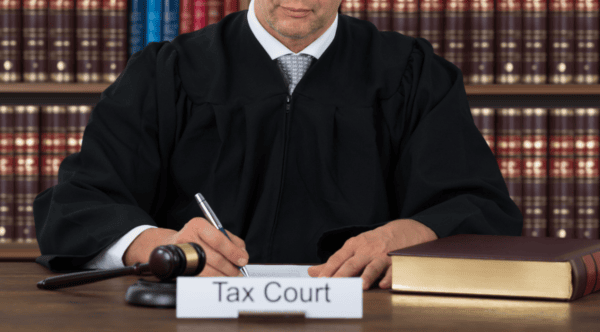
On July 14, the U.S. Tax Court in Eiler v. Commissioner held that certain legal fees recovered as part of a settlement are taxable income to consumer plaintiffs. The court also held that the deduction for fees awarded in connection with claims involving unlawful discrimination cannot be applied to certain cases brought under the Fair Credit Reporting Act (FCRA).
As covered in NACA’s previous Advocacy Update, the Texas A&M Tax Dispute Resolution Clinic represented James and Kathy Eiler, a Nevada couple who settled cases under the FCRA alleging inaccurate information on their credit reports and failure by the credit bureaus to correct it.
After receiving a deficiency notice from the IRS and several unsuccessful attempts to challenge and resolve the deficiency through other avenues, the Eilers filed a claim in tax court asserting that the 1) the legal fees paid to their attorneys were awarded under the fee-shifting provisions of the FCRA and should not have been included in their taxable income; or 2) if the fees were includible, the Eilers should be eligible for an above-the-line deduction under I.R.C. 62(a)(20) because the FCRA is a statute “providing for the enforcement of civil rights.”
The court rejected both arguments. According to the court, the legal fees were paid as part of a contingent agreement and were includible in the Eilers’ taxable income. The court held that because the fees were paid as part of a settlement, not a “successful action,” and the fees were not “determined by the court,” they were not awarded under the FCRA’s fee-shifting provisions. And even if they were, the fees would have still been taxable to the Eilers. Further, the court found that the provisions of the FCRA that the Eilers brought their cases did not implicate civil rights or unlawful discrimination for the purposes of I.R.C. 62(a)(20). According to this court, fair and accurate credit reporting is not within the natural meaning of a civil right. It is unclear whether the Eilers will appeal the decision.
Another pending case, Kinney v. United States, involving consumers seeking a refund for taxes paid on recovered legal fees, is before a Maine federal court.
The attacks and defense of the CFPB continue
The much-embattled Consumer Financial Protection Bureau remains front and center for lawmakers and consumer advocates as Acting Director Russell Vought departed the agency, and the Senate considers new CFPB director nominee Brian Johnson. Since February 2025, under Vought’s leadership, attempts to cripple the agency escalated. The new leaders dropped dozens of enforcement actions, withdrew scores of guidance documents, issued harmful new rules, and installed hurdles to submit consumer complaints. The bureau under Vought also attempted to fire most of the bureau’s staff, but NTEU, the CFPB employee union, is fighting back in court. CFPB foes in Congress are also circulating a draft bill to weaken and undermine the agency, including stripping it of its independent funding mechanism, imposing onerous rulemaking requirements, and narrowing its supervision and enforcement authority.
Meanwhile, we support other lawmakers’ efforts to maintain a strong CFPB. In June, for example, Sen. Elizabeth Warren (Mass.) introduced S. 4684, Protecting American Consumers Act, to not only restore funding levels reduced in a law last year, but to provide a mechanism to automatically fund the agency and avoid disruptions. In letters to the oversight committees, we shared our views on Sen. Warren’s bill and the challenges facing the CFPB.
FCRA liability restrictions, “Unleashing AI” on financial services, and other anti-consumer legislation move forward
The majority leading the U.S. House Financial Services Committee (HFSC) is doing more than seeking to weaken the CFPB, they are putting bills forward to undermine longstanding consumer protections and corporate accountability through their messaging lens of supporting “innovation” and other cynical corporate lobbyist talking points.
This summer, HFSC approved legislation to amend the Fair Credit Reporting Act that would place a hard cap on statutory damages that can be recovered in a class action, eliminate punitive damages for willful noncompliance cases, and limit consumers’ ability to recover attorneys’ fees. The committee also approved another bill that would clear fair credit reporting resellers of legal responsibility if they send inaccurate information received from other consumer reporting agencies. Read our letter to the committee on these bills. The committee also pushed legislation, Unleashing AI Innovation in Financial Services Act, to allow financial institutions to seek waivers from federal laws and regulations for their new AI-based products and services. This proposal would create an unacceptable risk of harm for consumers. We shared our opposition to the bill here. This proposal has now been tucked into the larger, harmful cryptocurrency legislation, the Clarity Act.
All these bills still require full House and Senate consideration and passage before they can become law.
State chairs oppose online lender’s attempted takeover of national bank
NACA state chairs added their names to a comment letter submitted to federal financial regulators to oppose Opportunity Financial’s (OppFi) bid to become a national bank. OppFi, an online lender, has applied to acquire BNC National Bank and to become a bank holding company. “Permitting OppFi to acquire a national bank would allow its risky, high-cost loans to evade individual states’ interest rate caps, increase the burden of long-term cycles of debt on consumer borrowers, and undermine proper enforcement of consumer protection laws,” the state chair letter said.
NACA Litigation files new cases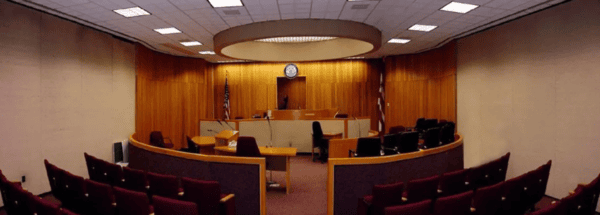
NACA recently filed two cases in DC Superior Court on behalf of the interests of DC consumers. In May 2026, NACA filed a lawsuit against GM Financial, a large vehicle loan servicer that operates around the country, alleging violations of the DC Consumer Protection and Procedures Act (DC CPPA). The complaint focuses on allegations that GM Financial charges fees to borrowers who make loan payments online or over the phone (“pay to pay fees”) even though GM Financial’s contracts with consumers do not authorize the company to charge such fees. NACA’s complaint also argues that the amount of fees that GM Financial charges consumers have no relation to the amount that it costs GM Financial to process online or phone payments, which means that these fees are merely a source of revenue for the company rather than an attempt to recoup the actual costs of payment processing.
NACA filed a lawsuit in June 2026 against Polymarket, a popular prediction market website that allows its users to make bets on a wide variety of topics, and several of its affiliate companies and executives. The complaint alleges that Polymarket deceptively and unfairly markets its product by, among other things, surreptitiously paying social media influencers to promote Polymarket’s gambling platform to target college-age young adults with fake betting results that mislead the public. In particular, NACA has alleged that Polymarket sets up false profiles for these influencers in order to dupe the public into believing that the influencers have “won” money on Polymarket’s platform when, in reality, the influencers would have lost money if they placed these same bets on Polymarket’s actual website using real money.
In both lawsuits, we are seeking declaratory relief and equitable relief, including disgorgement of profits and/or restitution.
NACA’s judicial campaign attends Netroots Nation and State Courts Convening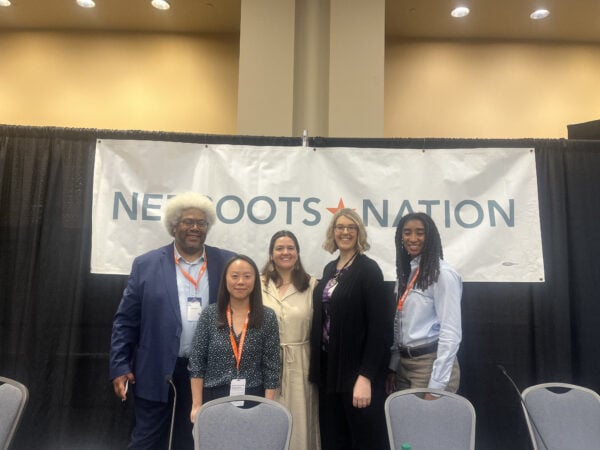
In June, NACA’s Judicial Campaigns Director Ryanne Olsen joined advocates and experts at Netroots Nation for a panel titled “Take SCOTUS Back! Why Now and How To Do It.” Our presence highlighted that this is the most pro-business Supreme Court in a century, and that’s no accident. Decades of coordinated investment in judicial pipelines have produced a Court that often shields companies from accountability while closing courthouse doors on consumers. Making the courts work for everyday people is a consumer rights and affordability issue.
On July 23rd and 24th, Ryanne represented NACA at a convening of groups advocating for fair courts and judges at the state level. If you’re interested in becoming a state or local judge, engaging in judicial selection, or connecting with other organizations in your state, please share your interest here as soon as possible! Ryanne will be following up with state organizations over the next couple of weeks, and would be happy to make any helpful connections.
Advocates discuss Supreme Court reform
The conversation around reform continues! On July 21, we hosted a webinar with the Brennan Center for Justice on two potential Supreme Court reforms: an enforceable code of ethics and term limits with regular appointments. We discussed the nuances of each proposal and how they could affect our community and consumer rights as a whole. Couldn’t make it? View the recording here. Have additional thoughts or questions? Let us know at ryanne @ consumeradvocates.org.