
Courts potentially set to issue decisions on treatment of consumer’s recovered legal expenses

Two cases regarding the double taxation of attorney fee awards are currently making their way through the courts. The U.S. Tax Court may make a precedential decision in a case brought by the Texas A&M Tax Dispute Resolution Clinic on the treatment of attorney’s fees awarded in a consumer case. Nevada consumers James and Kathy Eiler settled a case involving multiple violations of the Fair Credit Reporting Act in 2019. As part of the settlement, the Eilers received a small amount in damages and their attorneys received a much larger fee award. Because the Eilers did not receive any of the funds paid to their attorneys, they did not include them in their taxable income. In 2022, the IRS sent the Eilers a deficiency notice claiming that they owed significantly more in taxes than they had recovered from their case.
Since then, the Eilers have been attempting to challenge the IRS’s decision but the IRS has so far refused to concede. The case has been submitted to the Tax Court for a ruling without a trial based on the parties’ briefs. Attorneys for the Eilers anticipate that the Tax Court will issue a precedential decision in the case that could be applicable to consumers who recover their legal expenses in the future. Previously, consumers who have gone to Tax Court on this issue have reached individual settlements with the IRS.
Additionally, in Maine, consumers Russell and Jennie Kinney have filed a case in federal district court seeking to recover excess taxes paid on the recovered legal expenses awarded to their attorneys. The Kinneys successfully settled a wrongful foreclosure case in 2015 and lost nearly half of their recovery to additional unfair taxes. Since 2019, they have been seeking a refund of the wrongful taxes paid.
Feds’ attempts to exclude state protections
Preemption of state law is the unfortunate name of the game for many lawmakers on the federal level. With the rise of automated systems/artificial intelligence, new forms of the same-old predatory loans, and even products such as automated vehicles, where states have an acute public interest to protect their residents, industry allies in Washington are seeking to shield industries from protective state laws in these and other areas. We continue to join efforts to ensure application of state laws, including state common law and private enforcement mechanisms.
Highlights from the states
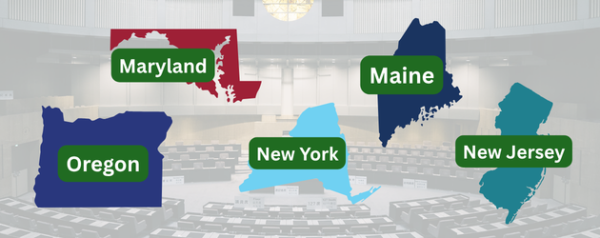
State legislatures are doing important work that affect consumer rights. We’ve been pleased to support, and oppose, bills impacting consumer protection. We appreciate all the state advocates and state-based organizations (Oregon Consumer Justice, Economic Action Maryland, Consumers for Auto Reliability and Safety, to name a few) who encouraged and inspired our involvement in the states.
NACA joined with the Consumers League of New Jersey to oppose legislation that would legalize for-profit debt settlement companies to operate in New Jersey. Currently, New Jersey restricts debt adjustment to nonprofit agencies and credit counseling organizations. The bill rightfully was rejected.
In Oregon, we supported a bill that would have ensured that insurers comply with the Unlawful Trade Practices Act and its prohibitions on unfair and deceptive practices. Currently, insurers are exempted. The legislation did not pass, but we will continue to support efforts to remove this insurer privilege.
We’ve been pleased to support the recent actions of New York City’s Department of Consumer and Worker Protection (DCWP). We testified at a hearing to urge consumer policies that include a private right of action. Separately, we supported the Department’s protections from debt collection abuses. Most recently, we submitted testimony to urge sufficient funding for the agency. “We have observed the many ways in which the DCWP has delivered economic justice on behalf of consumers and workers. This agency has successfully tackled junk fees, overcharges, debt collection abuses, bait-and-switch pricing, and other predatory schemes that rip off New Yorkers,” our letter said.
Maryland’s legislature is taking steps to address unfair provisions in consumer contracts. Last year, the legislature passed a law to prohibit contract terms that waive or limit the state’s statute of limitations for consumer claims. This session, the bill’s sponsor (and consumer attorney) Vaughn Stewart introduced legislation to prohibit waiver of substantive rights, specifically contract provisions that waive or limit statutory damages. We’ve enthusiastically supported these proposals at every step with written and in-person testimony.
Thanks to the leadership of CARS, we gladly joined with organizations to oppose a Maine bill that would have weakened protections for car buyers in the state and put many of them into vehicles they cannot afford, by carving out auto lenders from the state’s consumer lending law.
Would you like NACA to join you in supporting or opposing state or local legislation? Let us know.
Women judges speak on their journey to the bench
Opportunity to comment on DOJ rule Re: state bar oversight of DOJ attorneys
The Department of Justice has proposed a rule that would suspend state bar ethics investigations into DOJ attorneys while the Department conducts its own internal review. With no required timeline for completion, the DOJ could shield attorneys from state bar oversight through delay. State bar investigations and discipline have long ensured that all attorneys are held to the same professional standards. Without independent oversight, there is limited meaningful check on whether DOJ attorneys are meeting their ethical obligations. As consumer attorneys, we have a professional stake in preserving a fair and ethical legal system for all.
Comments on this rule are due April 6, 2026, and you can submit your comment here. For more information and sample comments, please refer to this guide put together by Lawyers For Good Government. Please let us know if you submit a comment (or have any questions) at [email protected]!