
Tell us: What are your recent experiences with forced arbitration?
Forced arbitration clauses continue to permeate the consumer protection landscape. Combatting forced arbitration and other restrictive contract clauses remains a top advocacy priority for NACA. How have your perspective and approach to forced arbitration and arbitration providers changed over the last five years? Complete this survey to share your perspective. Your experiences will help us with our advocacy. Please take the survey.
Litigation update: D.C. Court of Appeals hears oral arguments in Gemini appeal
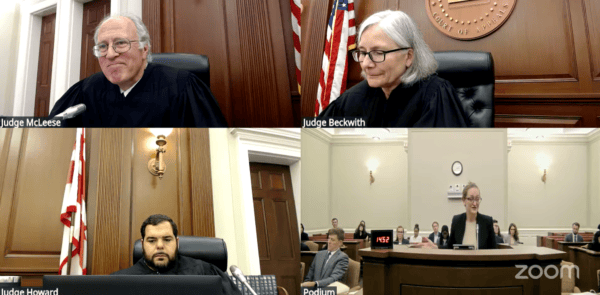
On September 22, in the case of NACA vs. Gemini Trust Company, the D.C. Court of Appeals held an oral argument to hear an appeal arising out of the D.C. Superior Court’s denial of Gemini Trust Company’s motion to compel arbitration. In response to NACA’s complaint raising claims under the D.C. Consumer Protection Procedures Act alleging that the cryptocurrency company’s customer agreement violates the Electronic Funds Transfer Act, Gemini Trust Company filed a motion to compel arbitration under the theory that NACA was essentially standing in the shoes of D.C. consumers and, as a result, NACA was subject to whatever contractual obligations, including arbitration provisions, those consumers had in their agreements with Gemini Trust Company.
In August 2025, Judge Raffinan of the D.C. Superior Court issued an opinion rejecting Gemini Trust Company’s arguments. Judge Raffinan found that because NACA had not signed any agreement with Gemini Trust Company, it could not be bound by any terms contained in the company’s agreements with consumers. The Court further held that NACA is not standing in the shoes of consumers when it brings claims under the D.C. CPPA and is more akin to a private attorney general bringing claims on behalf of the public. These issues were argued at the hearing last month and NACA anticipates that we should receive a decision at some point in the first half of 2027. NACA is represented in the case against Gemini by Tycko & Zavareei LLP, Varnell & Warwick, and Schlanger Law Group. The appellate argument was livestreamed on the D.C. Court of Appeals’ Youtube page and can be viewed here.
With CFPB database down, send consumer complaints to Congress
Since it was launched in 2012, consumer advocates have turned to the Consumer Financial Protection Bureau’s (CFPB) complaint database to help their clients. But with recent changes that completely undermine this resource’s access and utility, advocates should consider turning to lawmakers.
The complaint database has been an invaluable resource for consumers and advocates alike for many years, which makes the CFPB’s unprecedented recent decision to remove all consumer narratives from the database and archive them in its FOIA reading room all the more shocking. The CFPB has also announced it will no longer publish any consumer complaint narratives, effectively hiding corporate wrongdoing from the public. These moves follow implemented measures earlier this year that make it more difficult for consumers to submit certain types of complaints.
With the CFPB complaint database becoming drastically less accessible and useful to consumers, attorneys and their clients may have another option: their members of Congress. Every congressional office has a constituent services platform to serve communities. Unfair business practices affecting their constituents should concern them and hopefully spur them into action. Sharing complaints with clients’ congressional representative and senator: 1) gets help for your client; 2) raises awareness in Congress about the challenges consumers are experiencing; and 3) demonstrates the need for the CFPB complaint database.
If the CFPB will no longer publish information about the everyday harms face, then members of Congress should hear about it directly from consumers. Here is a short guide on how you can help your clients take advantage of congressional constituent services as a resource to get help and make themselves heard.
Access our congressional constituent services guide here.
Congressional update: harmful bills advance from House committee
 As covered in our August Advocacy Update, some lawmakers are continuing their attacks on the Bureau. Last month, members of the House Financial Services Committee introduced the Consumer Financial Protection Accountability and Reform Act, H.R. 10184 a sweeping, 99-page, deregulatory bill package that seeks to fundamentally reshape the CFPB and hamper its ability to protect consumers. During a committee mark-up on September 16, members voted to advance the bill out of committee. The next step is a full U.S. House vote. NACA joined Americans for Financial Reform, the National Consumer Law Center, the National Community Reinvestment Coalition, and the National Fair Housing Alliance to lead groups on a letter to Congress strongly opposing the bill.
In addition to this dangerous CFPB reform package, the committee also voted favorably to advance the Civil Investigative Demand Reform Act of 2026, H.R. 1653, which would hamstring the CFPB’s enforcement process with duplicative new requirements for conducting investigations, and the American Lending Fairness Act of 2026, H.R. 7866, which would end states’ abilities to enforce state interest rate caps on out-of-state lenders.
Each of these bills will still need to be passed by the full House and Senate before becoming law.
Connect with our Judicial Campaign at CRLC!
If you are attending CRLC in Atlanta and are at all interested in building a fair and balanced judicial bench, please join us for one (or both) of the following!
- Join us for a “Balancing the Bench” Lunch or Coffee! Whether you’ve considered becoming a judge yourself, want to support talented advocates on their way to the bench, or are passionate about making sure our courts work for all, we’d love to have you at the table. Join us over lunch (12:45pm-1:45pm) or coffee (3:30pm-3:45pm) on Friday in Room 215 to connect with fellow advocates, discuss opportunities to shape the judiciary, and learn how you can get involved in our judicial advocacy work. We’ll also be joined by Alliance for Justice’s Building the Bench Director, who will share insights on judicial pathways and opportunities to support prospective judges.
- Set up a 1:1 with NACA’s Judicial Campaigns Director. If you can’t join us, or would prefer to discuss your aspirations privately, Ryanne is available to meet individually during CRLC to talk through judicial pathways, advocacy opportunities, or ideas for strengthening our courts.
Share your judicial educational materials!
Too few judges come to the bench with experience representing consumers, which means advocates often find themselves educating judges about consumer protection laws as they advocate for their clients. We want to learn from your efforts! Have you developed materials to help educate judges, participated in judicial education programs, or found particularly effective ways to help judges understand consumer law? If so, please share your experiences and resources with us. Your work will help inform our future judicial education efforts.
Election day is less than a month away!
Election Day is Tuesday, November 3, and many states offer opportunities to vote early or by mail. We encourage all NACA members to make a plan to vote and help friends, family, and colleagues do the same! Attorneys play an important role in protecting the integrity of our elections and ensuring that voters can exercise their rights. If you’re interested in volunteering your legal skills this election season, we can help connect you with nonpartisan opportunities.
Interested in any of these opportunities? Have judicial education materials to share? Reach out to NACA’s Judicial Campaigns Director, Ryanne Olsen, at [email protected]. Thank you!