
by Christine Hines
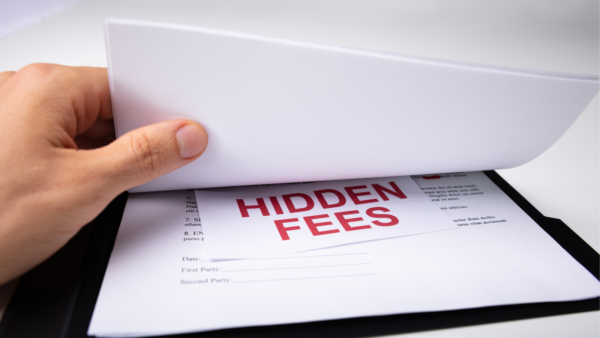
Despite scrutiny and criticism, pay-to-pay junk fees have not left. Over the last several years, courts and federal regulators examining pay-to-pay fee practices concluded that these fees may violate the federal Fair Debt Collection Practices Act (FDCPA), state debt collection protections, and state laws against unfair and deceptive practices. Yet, companies operating in auto lending, residential rental services, and utilities are facing new allegations of charging unlawful fees to customers at the time they make payments for these products and services.
Pay-to-pay fees, also called convenience fees, transfer fees, and transaction fees, have previously appeared when homeowners paid their mortgages and when car buyers made loan payments, online or by phone. For example, a loan servicer may charge a $7 fee each time a person makes a payment by telephone. Meanwhile, the cost to process the payment, as little as fifty cents per transaction, is typically far less than the fee charged. So, the servicer pockets the remainder as profit. These tactics illustrate how some companies use their power over borrowers and other bill payers to unfairly extract extra funds.
Washington, D.C. car buyers may be shelling out extra fees with their loan payments
Last month, the National Association of Consumer Advocates (NACA) brought a representative action against General Motors Financial to enforce the D.C. Consumer Protection Procedures Act on behalf of the interests of all District of Columbia residents who paid GM Financial’s pay-to-pay fees. NACA asserts that the auto loan servicer operated a payment collection system that wrongfully charges fees to borrowers who make payments online or over the phone.
Like other complaints against pay-to-pay junk fees, NACA asserts that borrowers’ auto loan agreements do not expressly authorize these fees, and the fees far exceed the transaction costs to process loan payments. Indeed, according to the complaint, an online transaction “in contrast to a check, is typically only a few cents and its electronic nature reduces overhead costs enormously.”
NACA also contends that the auto lender withholds key information from customers, namely that these fees are unrelated to the actual transaction costs, and that neither the lender nor the payment processor have the right to collect the fees. As such, the complaint contends that the auto loan servicer allegedly violated D.C.’s consumer law.
Washington state residents allege unlawful pay-to-pay fee charges on rental platform
A newly filed class action against CoStar Realty Information, which runs online rental marketplace, Apartments.com, presents similar complaints from renters. Among other functions, Apartments.com provides an online rental portal to property management companies for tenants to pay rent. Washington state resident Jessica Divens sued the platform in April for allegedly charging her and others an undisclosed $6.60 transaction fee to pay their rent and paying more in total than the amount agreed upon in their leases.
Divens’ complaint contended that the platform automatically charges a transaction fee to tenants making payments and does not inform them of the charged amount until the final step of the payment process. Further, the complaint alleged that the fee was not disclosed during the rental leasing process, and tenants were not informed that the fee was “not permitted in their residential leases.”
According to the complaint, the platform would “automatically opt-in” consumers to pay the transaction fees. Divens contends that tenants believed that the fee was “unavoidable” and were not made aware of other ways to pay rent to avoid the fee. The complaint asserted that the pay-to-pay fee practices are unlawful, unfair, and deceptive in violation of Washington’s consumer protection statute.
Lawsuit alleges that Indiana residents’ utility payments come with “variable rate” fees
With the cost of energy rising, working families are already struggling to keep up with their bills. A recent case filed on Nov. 25 alleges that companies are even tacking on pay-to-pay fees on monthly utility payments. The class action complaint filed on behalf of consumers in Indiana, alleged that PayGov.US, LLC, a payment processing company for municipalities, charged extra fees for utility payments. Indiana residents Amy Burke and Angelia McGlade assert, among other claims, that PayGov charged them and others “undisclosed, variable rate “convenience fees,”” each time they paid their utility bills to their municipalities.
PayGov, despite its name using “Gov,” is a private Indiana company and electronic payment processor for government and utility payments. The class complaint alleged that PayGov.US charged convenience fees that would “suddenly appear at the final payment screen,” on the online platforms, and that the fees would change and increase in accordance with the amount of the payment. The complaint named the conduct an illegal “junk fee practice,” and alleged violations of the Indiana Deceptive Consumer Sales Act against the payment processor.
Collecting payments on car loans, utility bills, rent, mortgages, and other consumer obligations carries significant legal and ethical responsibilities. The Consumer Financial Protection Bureau and the courts have consistently recognized that convenience fees are permissible only when the underlying agreement expressly authorizes them, and that separate agreements used to impose these incidental charges are prohibited unless specifically authorized under state or federal law. Such fees that lack legal authorization, are not included in consumer contracts, provide no meaningful benefit to consumers, and are disclosed only in the final stages of the payment process, are unfair and deceptive. They should be eliminated from consumer transactions.